

This is a special edition of This Week in Scams, focused on one of the biggest scam magnets of the year: sports betting.
With the New England Patriots and Seattle Seahawks set to face off in this weekend’s big game in the U.S., millions of fans are expected to place wagers, download betting apps, and chase last-minute promos.
And wherever there’s a surge in money and urgency online, scammers follow. From fake betting sites and phishing traps to shady offshore platforms and bogus “insider picks,” fraudsters are ready to cash in on the hype.
Here’s what to watch for and how to keep your money and your data protected.
What Do Online Betting Scams Look Like?
| Type of Scam | How It Works | Red Flags to Watch For |
| Fake betting sites | Scammers create copycat sportsbooks that look legitimate, then promote them through ads, search results, and social media.
Victims deposit money or enter payment details, but winnings are never paid out. Once exposed, the site disappears and a new one pops up. |
Unfamiliar URL or misspellings, “too good to be true” bonus offers, no clear licensing info, pressure to deposit quickly, limited customer support, payout issues |
| Sports app phishing scams | Scammers impersonate customer support or send fake account alerts via text or email.
The goal is to steal login credentials and take over betting accounts, draining funds or changing withdrawal details. |
Unexpected “account issue” messages, suspicious links, login pages that look slightly off, requests for verification codes, urgent language like “act now” |
| Unlicensed offshore platforms | Some sites operate outside the U.S. and are not regulated.
Even if they appear functional, they may charge hidden fees, freeze accounts, refuse payouts, or offer weak security protections that put user data at risk. |
No clear U.S. licensing, vague terms and conditions, unclear payout rules, limited dispute options, poor transparency on who owns or runs the site |
| Handicapper scams (fake tipsters) | Self-proclaimed “experts” claim they have insider information or guaranteed winning picks.
They charge users for access to picks, but the real goal is collecting payments, not helping anyone win. |
Claims of guaranteed wins, “exclusive insider tips,” requests for payment upfront, aggressive sales tactics, no track record or unverifiable success claims |
Is online sports betting legal in my state?
Since a U.S. Supreme Court ruling in 2018, individual states can determine their own laws for sports betting. Soon after, sports betting became legal in waves. In all, 39 states and Washington D.C. currently offer sports betting through licensed retail locations. Of them, 31 further offer legal sports betting through licensed online apps and websites. The map below offers a quick view as to how all that plays out.
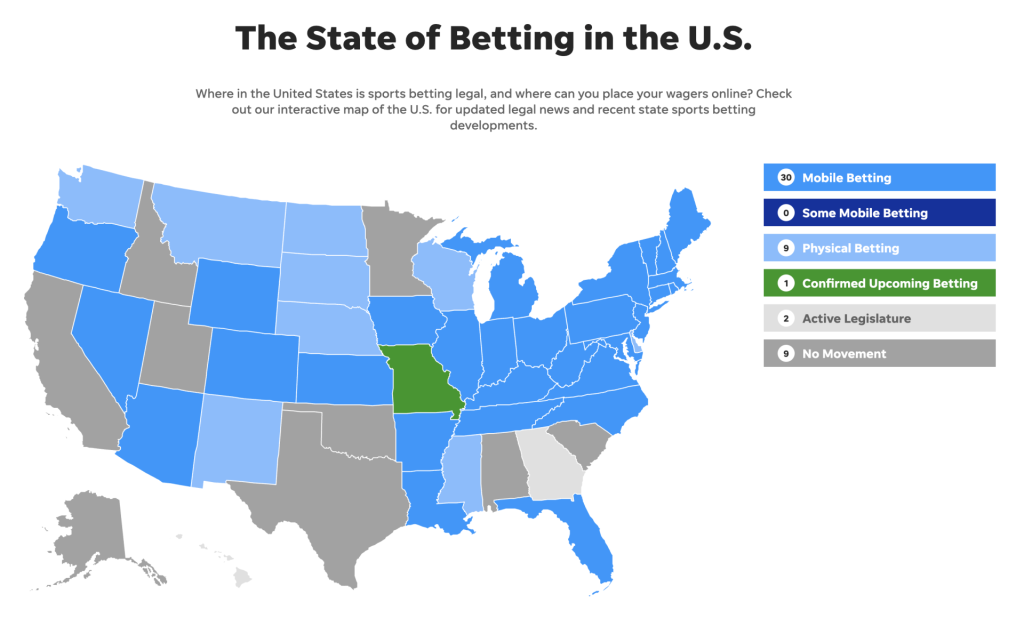
Image from https://sportsdata.usatoday.com/legality-map
Even as online sportsbooks must be licensed to operate legally, be aware that the terms and conditions they operate under vary from service to service. Per the Better Business Bureau (BBB), that calls for closely reading their fine print.
For one, you might come across language that says the company can “restrict a user’s activity,” meaning that they can freeze accounts and the funds associated with them based on their terms and conditions. Also, the BBB cautions people about those promo offers that are often heavily advertised, because “like any sales pitch, these can be deceptive.”
How to Protect Yourself from Sports Betting Scams
Sports betting scams are designed to hit when people are moving fast. The closer it gets to kickoff, the easier it is to click the first link you see, trust a “bonus offer,” or assume a site is legitimate because it looks professional.
A few smart steps can help protect your money and your personal information:
Stick with legitimate, regulated sportsbooks
Before you place a bet, make sure the platform is legal and licensed in your state. Scammers often build copycat sites that look real, but operate outside the U.S. and offer little or no consumer protection.
Be skeptical of bonus offers that seem too good to be true
“Risk-free” bets, massive signup bonuses, and guaranteed returns are often used as bait. If a promo is pushing you to deposit immediately or share personal information quickly, that is a red flag.
Avoid links from ads, texts, and social media posts
Scammers often promote fake betting sites through sponsored search ads or social media posts that look official. Instead of clicking, type the website address directly into your browser or use the official app store.
Use strong passwords and turn on two-factor authentication
Betting accounts can contain stored payment methods and withdrawal options, which makes them a prime target for account takeovers. Use a unique password and enable two-factor authentication whenever possible.
Use a tool that helps block malicious sites before you land on them
One of the simplest ways to reduce your risk is to use protection that flags dangerous links in real time.
McAfee WebAdvisor is free to download and helps protect you from malicious websites that may contain adware, spyware, viruses, or phishing scams. It can warn you before you click on risky links, so you can browse more confidently while searching for betting sites, tickets, or game-day deals.
Download McAfee WebAdvisor for free:
https://www.mcafee.com/en-us/safe-browser/mcafee-webadvisor.html
You can also use McAfee’s Scam Detector to help identify suspicious links and scam messages before you interact with them.
** Editor’s Note: If gambling is a problem for you or someone you know, you can seek assistance from a qualified service or professional. Several states have their own helplines, and nationally you can reach out to resources like http://www.gamblersanonymous.org/ or https://www.ncpgambling.org/help-treatment/.

Stay Updated
Follow us to stay updated on all things McAfee and on top of the latest consumer and mobile security threats.